
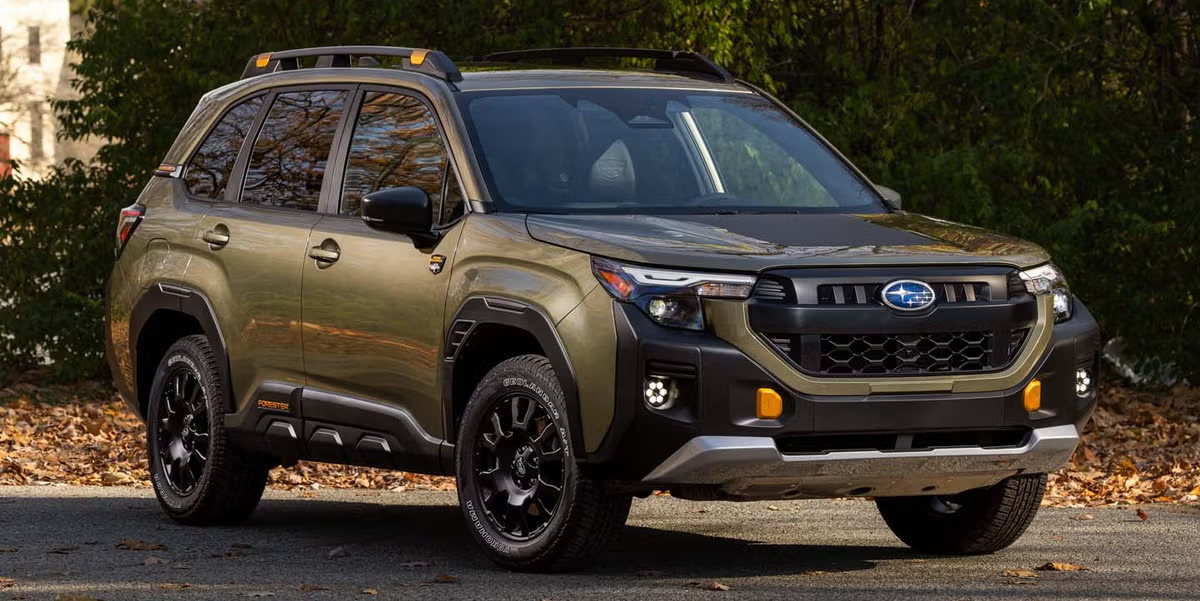
If you’re looking for where are Subaru Foresters made, the answer is strictly Japan. Unlike the Outback, Ascent, and Legacy, which are built in Lafayette, Indiana, every Forester sold in the U.S. is manufactured at the Yajima Plant in Gunma Prefecture. This “Made in Japan” status is a point of pride for many owners, though it does mean the model is subject to international shipping timelines that don’t affect Subaru’s domestically built SUVs.
This means the Forester carries a 2.5% import tariff as a passenger car (not subject to the 25% truck tariff), which adds a relatively modest cost to its price. The Japanese origin of the Forester is broadly seen as a positive by enthusiasts – Subaru’s Gunma facilities are known for consistent quality control, and the Forester has earned a strong long-term reliability reputation.
Subaru Manufacturing Facilities Overview
| Plant Location | Country | Models Produced | Notes |
|---|---|---|---|
| Yajima Plant, Gunma | Japan | Forester, Impreza, WRX, BRZ, Crosstrek (some) | Subaru’s flagship manufacturing campus |
| Oizumi Plant, Gunma | Japan | Engines, transmissions | Powertrain manufacturing; supplies Yajima and Indiana |
| Subaru of Indiana Automotive (SIA) | Lafayette, Indiana, USA | Outback, Legacy, Ascent, Impreza (some) | Opened 1989; employs ~6,000 workers |
| Toyota collaboration (Onnaing, France) | France | BRZ / GR86 (European models) | Toyota-Subaru joint production for EU market only |
How Much of the Forester Is Made in Japan vs Elsewhere?
According to NHTSA AALA data, the Subaru Forester typically shows 0-5% US/Canadian parts content, reflecting its almost entirely Japanese manufacturing and supply chain. The engine, transmission, body components, and electronics are all sourced and assembled in Japan.
This contrasts with the Subaru Outback and Ascent, which are assembled in Indiana and show significantly higher US/Canadian parts content – typically 60-75% depending on the model year and specific configuration.
Forester vs Outback vs Crosstrek – Where Each Is Made
| Model | Assembly Country | US/CA Parts % | Import Tariff |
|---|---|---|---|
| Forester | Japan (Yajima, Gunma) | 0-5% | 2.5% (passenger car) |
| Outback | USA (Lafayette, Indiana) | 60-75% | No tariff – domestic assembly |
| Legacy | USA (Lafayette, Indiana) | 60-75% | No tariff |
| Ascent | USA (Lafayette, Indiana) | 55-70% | No tariff |
| Crosstrek | Japan (Yajima) + some Indiana | 10-30% (varies) | 2.5% for Japan-built units |
| WRX | Japan (Yajima, Gunma) | 0-5% | 2.5% |
| BRZ | Japan (Yajima, Gunma) | 0-5% | 2.5% |
Does ‘Made in Japan’ Affect Forester Quality?
The evidence suggests it helps rather than hurts. The Forester consistently earns strong reliability scores from J.D. Power, Consumer Reports, and RepairPal. Subaru’s Gunma plants have been producing vehicles for decades with well-established quality processes and relatively low turnover in the skilled workforce that builds these cars.
The Subaru of Indiana plant also has a strong reputation – the Outback and Ascent both earn solid reliability ratings despite being US-assembled. So for Subaru specifically, the assembly location doesn’t appear to create a quality difference either way.
Import Duties and How They Affect Forester Pricing
As a passenger car (not a truck), the Forester faces a 2.5% import tariff – not the 25% tariff applied to pickup trucks. On a $30,000 Forester, that’s approximately $750 in tariff cost – a relatively modest amount that has minimal impact on final retail pricing.
- Any potential future tariff increases on Japanese imports could affect the Forester’s price more significantly.
- Currency exchange between USD and JPY also influences pricing – a stronger dollar relative to the yen makes imported vehicles cheaper; a weaker dollar makes them more expensive.
- Subaru has not announced plans to move Forester production to the US, though it could theoretically be absorbed into the Indiana facility.
For Forester buyers wondering about origin: you’re getting a Japanese-built vehicle from Subaru’s primary production campus, with a supply chain that’s almost entirely Japanese. Whether that’s a selling point or a concern depends on your priorities – but on the question of build quality, the Forester’s reliability record makes a strong argument for the status quo.
